When Self-Awareness Backfires
We Might Be Overthinking Our Soul
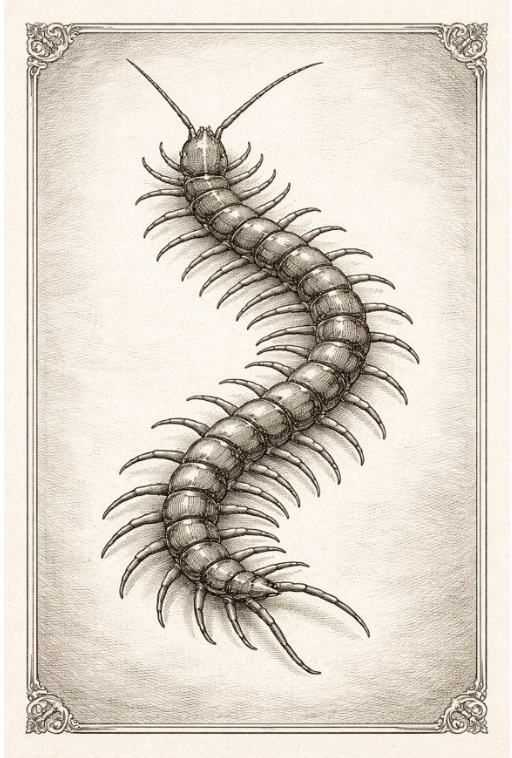
There’s an old poem by Katherine Craster about a centipede:
A centipede was happy—quite!
Until a toad in fun
Said, “Pray, which leg moves after which?”
This raised her doubts to such a pitch,
She fell exhausted in the ditch
Not knowing how to run.
The centipede was doing just fine—walking, moving, living—until the toad invited her to think about how she was doing it. And the moment she turned her attention inward, her mind…and legs…got tied into knots. What had once been natural became confusing and complex and she didn’t become more aware. She became stuck.
The Centipede Effect
Psychologists call this the centipede effect—when something that once flowed naturally becomes disrupted by too much reflection.
A golfer starts thinking about every detail of his swing and suddenly can’t hit the ball. A pianist overanalyzes her fingers and loses the music. A public speaker becomes aware of his voice and immediately sounds like he’s auditioning for a documentary on anxious breathing.
Too much awareness can interfere with movement, and increasingly, I wonder if something similar is happening to us.
We are living in an age of unprecedented self-awareness.
We can name our attachment patterns. We can trace our trauma. We can identify our triggers. We can locate the parts of us that protect, perform, or shut down. For many people, therapy has opened this door to the soul - a door that had been locked for too many years. And that is a true gift.
For generations, people suffered silently with no language for their inner world. Now many are able to say, “Oh… that’s what’s happening inside me.” The lights come on. Compassion replaces confusion. And we should thank God for that.
But every gift carries a risk, because introspection, like the centipede’s reflection, can quietly turn against us when it becomes the center of gravity.
We were meant to examine ourselves, but we were never meant to orbit ourselves.
When Awareness Becomes Paralysis
There is a subtle shift that happens when introspection goes too far. At first, it brings clarity. Then it brings language. Then it brings understanding. But if we’re not careful, it begins to bring something else.
Hesitation.
You start second-guessing your reactions. You analyze your tone mid-sentence. You wonder if your boundary was healthy or avoidant, your emotion valid or triggered, your attachment secure or slightly anxious with a hint of childhood residue.
You feel a pain in your stomach and—because you’re now very self-aware—you do the responsible thing and check WebMD. Three minutes later you are 87% sure you have a rare form of stomach cancer and spend the rest of the night tossing and turning and writing your own obituary when the truth is you ate the entire burrito for dinner when you knew—knew—you should have stopped halfway.
But now it’s no longer about the burrito. And before long, you’re no longer living, much less sleeping naturally. Like the centipede, you are now thinking about which leg moves after which. And something that once flowed… doesn’t.
Hedonic Living and the Shrinking of the Soul
Have you ever been stuck inside your own head? Lord knows I have. The ancient philosophers saw this tension long before modern therapy existed. They spoke of two ways of living. One aimed at the self: comfort—reducing pain, increasing pleasure, managing distress. What we now call hedonic living.
The other aimed at meaning—virtue, purpose, becoming the kind of person who lives for something beyond themselves. What they called eudaimonia.
Modern research echoes this distinction. Studies have shown that people who pursue meaning and purpose tend to report deeper and more enduring well-being than those primarily focused on personal comfort and pleasure.
In other words, feeling better and being well are not always the same thing.
Our therapeutic age, for all its strengths, often leans toward the hedonic: Feel better. Reduce symptoms. Manage distress.
Again—these are not bad goals, per se, but they are not big enough for a flourishing life. Because if the goal of your life is simply to feel better, you will inevitably become preoccupied with yourself. Your inner state becomes the primary project. Your emotional equilibrium becomes the measure of success.
And we get stuck in our own head and the soul begins to shrink.
Theology Examines—and Then Sends
Biblical theology does something both similar and radically different. It calls us to examine ourselves.
Paul says it clearly:
Let a person examine himself…
(1 Corinthians 11:28)
But notice the context. Paul is not inviting endless introspection. He is preparing people to come to the table—to receive Christ. To recognize their sin. To remember their need for grace. To come honestly before God and receive what they cannot give themselves.
Self-examination, in Scripture, is never about becoming endlessly self-aware. It is about becoming rightly dependent. And then, just as importantly, it refuses to let us stay there. Because the story keeps moving. To love God. To love neighbor. To participate in the restoration of a broken world.
The Bible does not deny the inner life. It just refuses to make it ultimate. Because human beings were not created to endlessly analyze themselves.
They were created in the image of a God who gives Himself away.
From Self-Focus to Self-Giving
This is where theology carries weight that therapy alone cannot. Therapy helps us understand our symptoms. It helps us make sense of our past. It helps us untangle what is happening inside us. But Biblical theology places all of that inside a larger story.
A story where your anxiety, your wounds, your patterns—real as they are—are not the center. A story where you are being transformed, not just understood. A story where the goal is not simply self-awareness, but self-giving love.
Jesus Himself says it plainly:
“Whoever wants to save his life will lose it, but whoever loses his life for my sake will find it.”
(Matthew 16:25)
That is not hedonic. That is eudaimonic to the core. It is often when we move beyond ourselves that we finally begin to heal. Not by ignoring our wounds. But by refusing to make them the center of our existence.
The Right Kind of Questions
So are these questions—What am I becoming? Who am I loving? What am I giving my life to?—therapeutic or theological?
The answer is: both.
Therapy can help you see why those questions feel hard. Biblical theology tells you why they matter.
And without that second piece, the first one can only take you so far.
The centipede didn’t need better analysis. She needed to start walking again. And in much the same way, there comes a point in every human life where the question is no longer just, “What’s happening inside me?”
But, “What am I being called into?”
From Symptoms to Shalom
This is the movement I explore in my book, From Symptoms to Shalom. It is not a rejection of therapy. Not a dismissal of introspection. But a reordering.
From symptoms… to story.
From analysis… to transformation.
From self-focus… to shalom.
Because the goal was never just to understand your life. The goal is to live it.
If you’ve done the work of understanding yourself but still feel stuck. If you’ve gained insight but long for something deeper, more grounded, more whole. You’re not missing information. You may be ready for integration.
In From Symptoms to Shalom, I explore how the Christian story brings together the inner life and the larger purpose we were made for.
And if you want help walking that path in a more personal way, I offer soul care coaching for pastors, leaders, and thoughtful people navigating the long road of faith and formation.
Because at some point, the centipede has to stop analyzing…
…and start moving again.