Identity: Becoming Who We Are – Part 1
Why Do I Keep Doing the Thing I Hate?
I haven’t been myself this week. You know the feeling. A little off. Spring allergies beginning to stir up. A little unmotivated. A little tired. A little… not quite right. If I’m honest, though, it hasn’t just been this week. There have been entire seasons of life where I’ve thought, "I haven’t really been myself this year." Or even more honestly, "I haven’t been myself… yet. I mean ever. Not really. At least not the self I want you to see."
Because the version of "myself" that I’d like to present to the world—the portrait version—is filled with discipline, wisdom, patience, generosity, humility, and love. The portrait version of me is calm in traffic, thoughtful in arguments, and spiritually alert before coffee.
But the real-life version of me sometimes (often) looks… different. And if we’re honest, the same thing is probably true for you. Most of us walk around with a slightly confused, swirled-up sense of our own identity.
The writer Dick Keyes once suggested that a healthy identity has two qualities: integration and acceptance. Integration means there’s a kind of "what you see is what you get-ness" consistency to your life. Acceptance means you have a settled peace with who you are. But many of us live with the opposite. Not integration, but dis-integration. And very little peace with ourselves.
Which is exactly the problem the Apostle Paul describes.
Paul’s Honest Confession
Paul writes,
"For I do not do what I want, but I do the very thing I hate."
Romans 7:15
That verse lands very differently once you’ve lived long enough.
At twenty you read it and think, "Interesting thought. But I’ve got plenty of time to grow into the person I want to be." At forty you read it and think, "Oh good. Even the Apostle Paul had this problem." Because eventually everyone experiences this.
You promise yourself you won’t react that way again. And then… it happens. You snap at your spouse and immediately think, "Wow. That was mature." You shut down in a difficult conversation and switch into polite listening mode while internally planning tomorrow’s grocery list. You scroll late into the night even though you said—out loud—"I’m going to bed early tonight." You avoid the conversation you know you need to have… and then rehearse it in your head twenty-seven times without ever actually having it.
And afterward you sit there wondering: Why do I keep doing this?
The Jacob Problem
Scripture actually gives us a character who lived this confusion in full color. His name was Jacob. Jacob’s name literally meant "heel grabber." It comes from the story of his birth, when he came out of the womb grabbing his twin brother Esau’s heel (Genesis 25).
But the name meant more than that.
In Hebrew culture, "heel grabber" was a phrase used for someone who trips others up to get ahead—a deceiver, a manipulator, a schemer. Someone who grabs whatever he can in order to secure the identity he wants.
And that’s exactly how Jacob lived.
He manipulates his brother out of his birthright. He deceives his father for the blessing. He spends decades grasping for wealth, security, and control. Jacob spends most of his life grabbing at things to construct a self.
And if we’re honest, we do the same thing.
We grab at diplomas on the wall. We grab at bigger bank accounts. We grab at fitness routines. We grab at wardrobes. We grab at influence. We grab at reputations. We grab at whatever helps us build the portrait of the person we want others to see.
Maybe it’s the job title that makes people pause when they hear it. Maybe it’s the luxury SUV. Maybe it’s the perfectly curated family photo. Maybe it’s the image of being the funniest person in the room, the smartest person in the room, or the most spiritual person in the room.
Whatever it is…We grab. And grab. And grab.
Trying to construct the perfect version of "myself."
There’s just one problem.
If our identity is built on competence, beauty, success, reputation, or approval, the whole thing eventually becomes a house of cards. Paul warns about this in 1 Corinthians 3, when he says we must build our lives on the foundation of Christ. Anything else will eventually crumble.
And Jacob’s life proves it. His story isn’t romantic. It’s messy. His family life makes a season of "The Bachelor" look emotionally healthy. And he spends much of his life terrified that everything he has built will collapse.
Because when identity is built on performance, fear is never far away.
The Two Explanations We Usually Reach For
When our reactions expose this instability, most of us reach for one of two explanations.
The first explanation is shame. Something must be wrong with me. Maybe I’m not mature enough. Maybe I’m not disciplined enough. Maybe I’m not spiritual enough. Maybe I’m not smart enough, good-looking enough, successful enough, or funny enough.
Maybe God is up in heaven watching my life like a disappointed coach saying,
"Come on. You’ve been a Christian how long?"
Christians can become incredibly creative when it comes to inventing reasons to feel guilty. We replay conversations in our heads, dissect our motives, and quietly conclude that the real problem is simply that we’re not very good Christians.
But while shame feels spiritual, it actually misunderstands the gospel.
The Bible says that in Christ we are forgiven, adopted, and no longer condemned (Romans 8:1). Shame assumes our failures define us. The Gospel says Christ already dealt with our failures at the cross.
So shame cannot explain the struggle. It only deepens it.
The second explanation we often reach for is personality. If shame feels too heavy, we swing the other direction. "That’s just how I am." I’m just anxious. I’m just blunt. I’m just driven. I’m just not an emotional person. I’m just someone who overthinks everything.
Sometimes we say this with resignation. Sometimes with pride. Sometimes the way someone says, "My dog ate the homework."
It’s unfortunate, but apparently unavoidable.
But the Bible doesn’t let us hide behind personality either. It’s an excuse.
Scripture consistently assumes that people can change—that the Spirit is actively
transforming us into the likeness of Christ (2 Corinthians 3:18).
So if shame says "I’m hopeless," and personality says "I’m stuck," the Gospel says something entirely different.
You are being changed.
And that brings us to Paul’s real explanation. Paul describes the Christian life as
an inner conflict.
A part of you wants peace. Another part panics.
A part of you wants to trust God. Another part grabs the wheel like a backseat driver shouting, "Move over — I’ve got
this."
A part of you wants intimacy. Another part quietly shuts down to avoid getting hurt.
You are not a simple creature. You are a complicated human being with an inner
world.
And Paul describes this conflict as the struggle between the old self and the
new self.
True Identity vs. Experienced Identity
If you are in Christ, something decisive has already happened. You have been forgiven. You have been adopted. You are a new creation. You are united with Christ.
That is your true identity.
But your experienced identity—how life actually feels on a Tuesday afternoon—is still catching up. Part of you is learning to live in the freedom Christ secured. Another part is still reacting out of old fears, old wounds, and old habits. So your life sometimes feels like a tug-of-war between who you are in Christ and who you learned to be in a broken world.
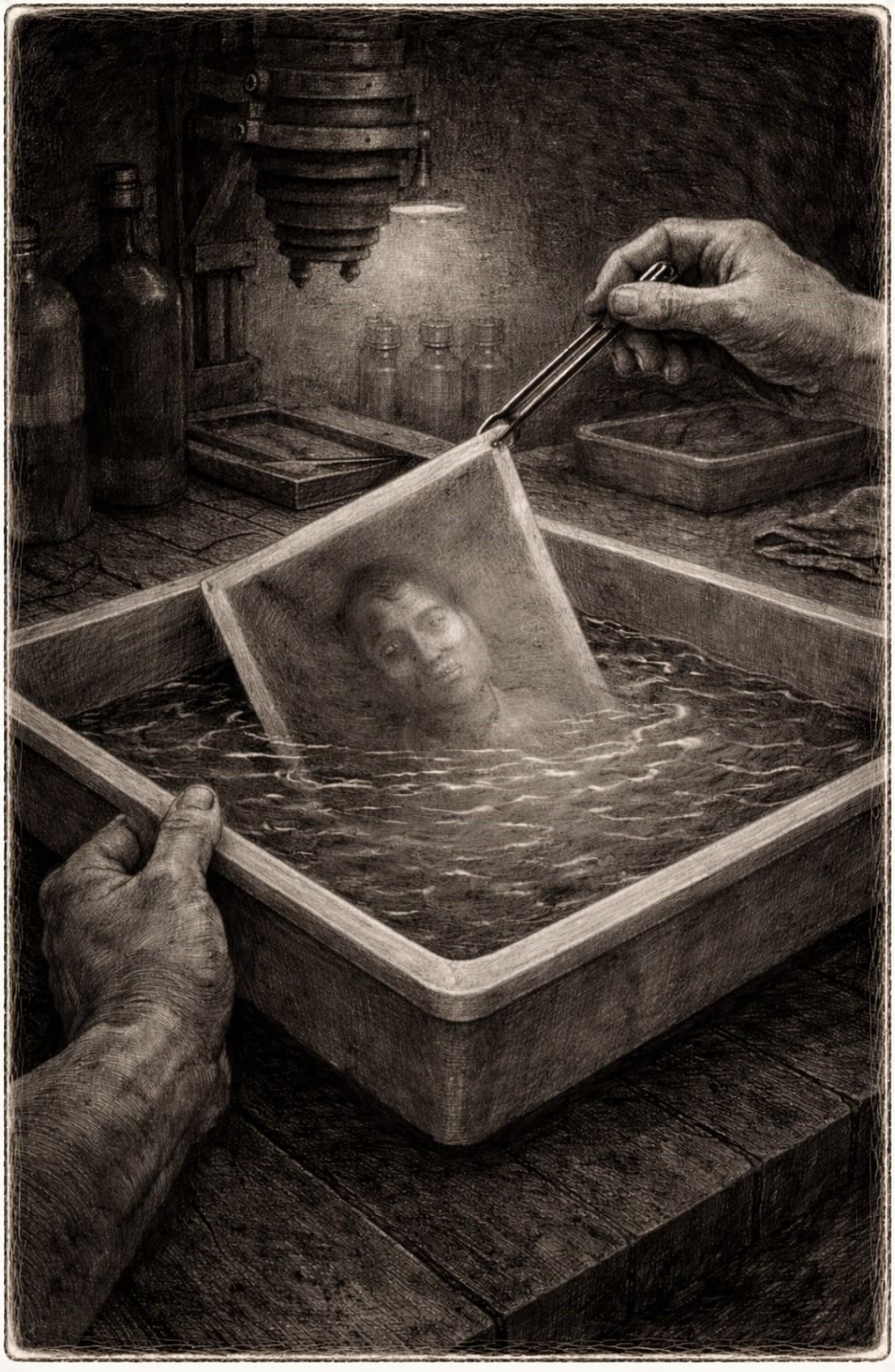
Years ago, back in what my kids refer to as the "dark ages," I worked for a newspaper. The paper had an actual darkroom where the photographs for the articles were developed. Despite the fact that the chemical fumes needed to develop the film made the room smell like a science experiment gone wrong, I loved working there because of the magic of watching photographs develop.
The image was already there on the film. You just couldn’t see it yet.
Slowly, as the paper sat in the developing tray, shapes began to appear. Shadows. Faces. Details. What looked blank at first gradually came into focus.
That’s a lot like the Christian life.
In Christ, the image is already there. God already sees the finished picture. Sanctification is the slow process of that image coming into focus.
Questions to Consider
Think about the last time you reacted in a way you regretted.
Ask yourself:
- When was the last time I reacted in a way that surprised me?
- What situation triggered that reaction?
- What emotion was underneath it—fear, shame, anger, or something else?
- Did my response feel automatic or almost reflexive?
Our reactions often move faster than our intentions. Which is why willpower alone rarely solves the problem. Something deeper is happening. And understanding that inner dynamic is often the beginning of real spiritual growth.
Much of the work I do in coaching conversations focuses on helping people understand their inner world through both Scripture and practical insight into how the mind works.
For a ministry leader, it might look like realizing that the exhaustion and constant pressure to perform isn’t just a busy schedule—it’s a deeper fear of disappointing people or failing God.
For a husband, it might mean discovering that the anger that comes out during conflict is actually protecting a quieter fear of inadequacy or rejection.
For a twenty-something trying to figure out life, it might look like understanding why every decision feels paralyzing—because somewhere inside there’s a belief that getting life wrong means you’ll never recover.
For a mom, it might mean recognizing that the overwhelming pressure to "do everything right" isn’t just about loving your kids well—it’s about the deeper fear of failing the people who matter most.
For the employee who quietly wonders if their work matters, it might mean uncovering the old voice that keeps whispering, "You’re not really that important."
When people begin to understand what’s happening beneath their reactions, something remarkable often happens. Shame starts to loosen its grip. Defensiveness softens. Patterns that once felt automatic begin to make sense.
And once you can see what’s actually happening inside you, you can begin to change—not by trying harder, but by learning to live more fully from who you already are in Christ.
That kind of work—integrating Scripture with a deeper understanding of the inner world—is the focus of my coaching practice. If this conversation resonates with you, you can learn more about my work at: www.thewaysoulcare.com.
Real change often begins the moment we stop condemning ourselves and start getting curious about what God might actually be doing beneath the surface. Because the Christian life is not about inventing a new self.
It’s about becoming who we already are in Christ.