Self-Pity and the Backward Pull of the Soul
My mom was never tolerant of self-pity. When I was a kid and she sensed me drifting into that little emotional cave, she’d snap me out of it with a song:
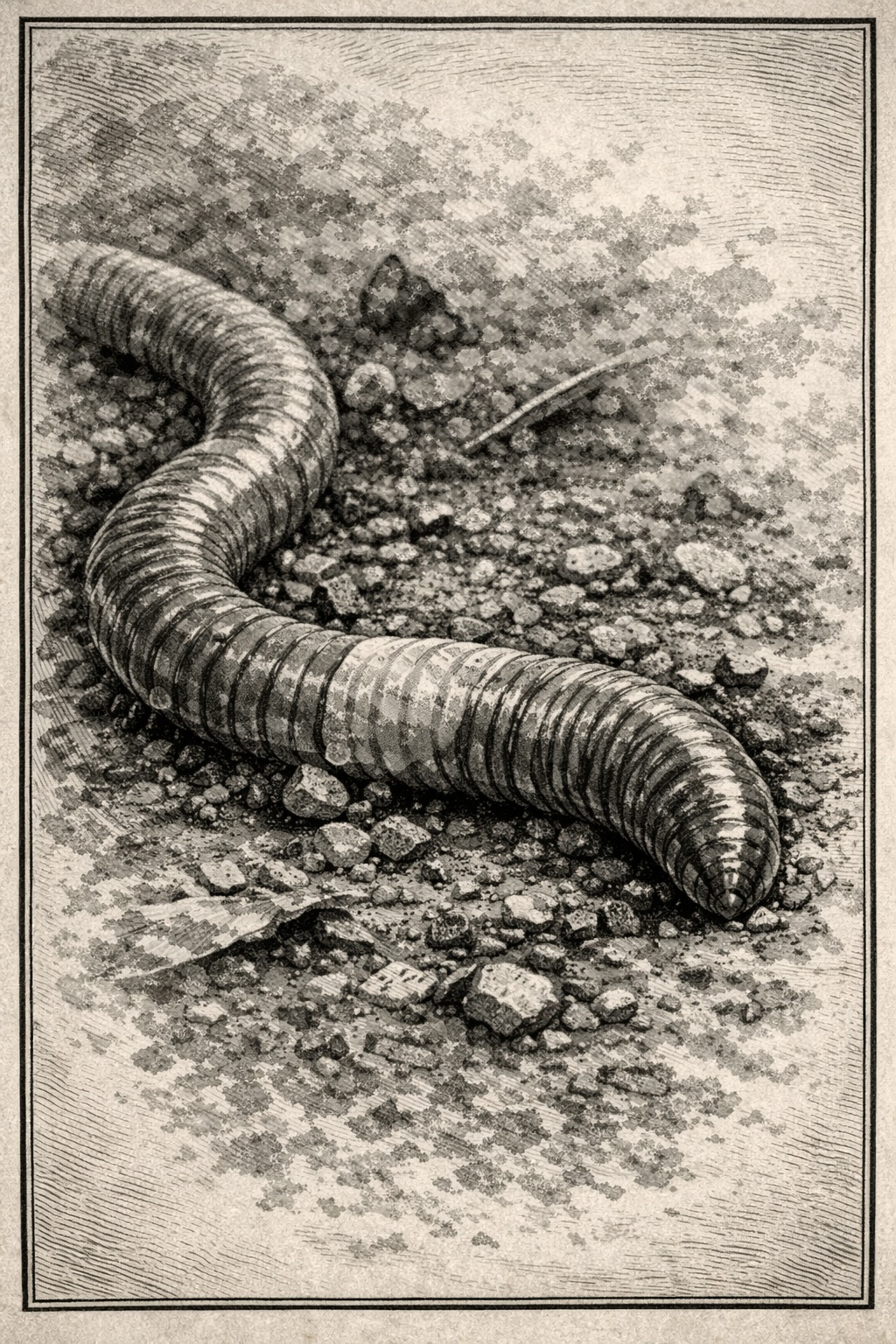
“Nobody likes me, Everybody hates me, I guess I’ll go eat worms!”
Fat ones, skinny ones, little tiny bitty ones—Oh how they squirm and squirm!”
A timeless classic sung at many childhood pity parties. Equal parts comedy and tragedy — and, if we’re honest, alarmingly close to how many grown adults operate on the inside. Some of us just graduated from worms to more sophisticated diets of grievance. But the song stayed lodged in us. It’s the national anthem of the inward-curved soul. Augustine would’ve nodded and said, “Ah yes — incurvatus in se, the heart curved in on itself.”
And some of us learned that tune at home.
My dad — God bless him — could host a world-class pity party. He didn’t mean to. He wasn’t malicious. He just had a way of letting disappointment fill the room like gravity. I loved him. I learned from him. But I also absorbed that subtle inward bend — the quiet message that life was happening to us, not through us. He didn’t teach it; kids just learn by osmosis. And I grew up fluent in the art of “poor me.”
But the problem is, self-pity never stays a feeling. It becomes a posture. A curvature. And lately I’ve noticed how this self-protective habit has become a kind of osteoporosis of the soul — thinning my trust, weakening my courage.
Scripture is painfully honest about how ancient this reflex is.
The Desert: The Complaining Heart That Wants Yesterday’s Slavery
Remember Israel in the wilderness? Their grand, forty-year camping trip of spiritual formation?
God parts the sea. God feeds them bread from the sky. God brings water out of rock. And their response?
“We miss Egypt.”
“At least there we had three meals a day…”
“Do you not care?! Do you not see?!”
“The giants ahead are too big — let’s go back to making bricks in Egypt.”
See the pattern?
Self-pity collapses vision until the soul can see nothing but its own discomfort, its own fear, its own lack, its own smallness. It makes God small, problems large, and the self the trembling center of the universe. And so even with resurrection-shaped promise spread before them like a banquet, they could not see beyond the ache of the present moment.
Self-pity blinds. It shrinks. It distorts. It screams: “We can’t”, “It’s not fair”, “God doesn’t care”, “Don’t you see me?”
It’s the inward bend Augustine warned about: the heart curved in on itself because it feels entirely entitled to its complaining. Self-pity convinces us that yesterday’s bondage is safer than tomorrow’s blessing, that the familiar slavery is more reliable than God’s unfolding freedom and promises. And that in-between wilderness — the place where we’re out of control, unsure, uncomfortable?
Cue the worm-eating song.
Why Self-Pity Feels So Good (For About Ten Seconds)
Self-pity has a strange sweetness. It’s emotional junk food — comforting, numbing, cheap. So why do we keep reaching for it?
Because self-pity gives us a sense of control in moments where we feel powerless. If I cast myself as the victim, I get to write the whole narrative. I choose the villains, justify my reactions, and excuse my passivity. Victimhood becomes a throne — small and rickety, but still a throne.
Self-pity also gives us the illusion of importance. If my pain is unmatched, then I’m unique. If my wounds are special, then my story is special. It’s a dark form of self-centeredness — spotlighting the self through suffering.
Then comes the payoff of immunity. When I’m the wounded one, I don’t have to risk trusting again. I don’t have to forgive, obey, or grow. I can stay motionless and call it survival. And as long as I’m the injured party, no one can ask anything of me — not God, not others, not even my own future.
Self-pity even grants a kind of moral leverage: Sympathy becomes currency. Withdrawal becomes righteousness. Bitterness becomes defensible. It lets me weaponize my wounds so I can win without ever having to change.
But peel back every layer, and the final ingredient is always the same:
Pride.
Self-pity is pride with slumped shoulders. Pride dressed in rags. Pride curled inward. It’s the belief that my pain puts me in a separate category. My suffering justifies exemption. My discomfort grants permission to retreat, sulk, stall, or reverse. Self-pity is what pride becomes when it’s too tired to boast.
The Gospel Straightens the Spine
But resurrection hope always calls us onward, humbly trusting. The Promised Land is ahead — always ahead. And the kingdom has no reverse gear.
While self-pity shrinks our vision, it also blinds us to God’s past faithfulness or any imagination for the future He promised. Egypt — with its chains, its whips, its dead sons — suddenly looks safer than the risky beauty of freedom in faith in the Gospel.
But Jesus is the anti–self-pity Savior. In the wilderness He refused Satan’s invitation to entitlement — even starving, he answered, "It is written, "‘Man shall not live by bread alone,but by every word that comes from the mouth of God.’" (Matt. 4:4).
In Gethsemane He lamented without collapsing inward, praying, saying, "Father, if you are willing, remove this cup from me. Nevertheless, not my will, but yours, be done." (Luke 22:42).
On the Via Dolorosa He carried the cross without demanding sympathy, telling the weeping women, But turning to them Jesus said, "Daughters of Jerusalem, do not weep for me, but weep for yourselves and for your children. (Luke 23:28).
On the cross He offered forgiveness instead of bitter victimization, saying, "Father, forgive them, for they know not what they do." And they cast lots to divide his garments. (Luke 23:34).
And in His endurance He “despised the shame” of the cross (Heb. 12:2) — refusing to let humiliation, injustice, or suffering fold Him inward. He faced it all with His eyes fixed forward, for the joy set before Him.
Jesus breaks the curvature.
And He leads us forward: into responsibility, into gratitude, into courage, and into the Promised Land of real growth. Because the kingdom has no reverse gears, no backward marching orders, no “return to Egypt” clauses.
Self-pity whispers, “Go back.”
The Spirit whispers, “Keep going.”
And somewhere between those two voices, the old childhood worm-song fades, and a new song rises —not about being unloved, but about the God who refuses to let us stay bent inward forever.
So here’s the invitation: when you feel that inward bend tightening—when the complaints rise, when Egypt starts looking strangely attractive, when the worms start warming up their choir—stop, pray, and choose to put your car in drive. Name the self-pity. Renounce the pride beneath it. Ask Jesus—the One who despised the shame and refused the backward pull—to straighten your spine again. Then take one small, trusting step toward the Promised Land. Not because it’s easy, but because He’s already gone ahead of you, and called you to resurrection courage. Because this is The Way.