When Status Becomes a God and People Become Furniture
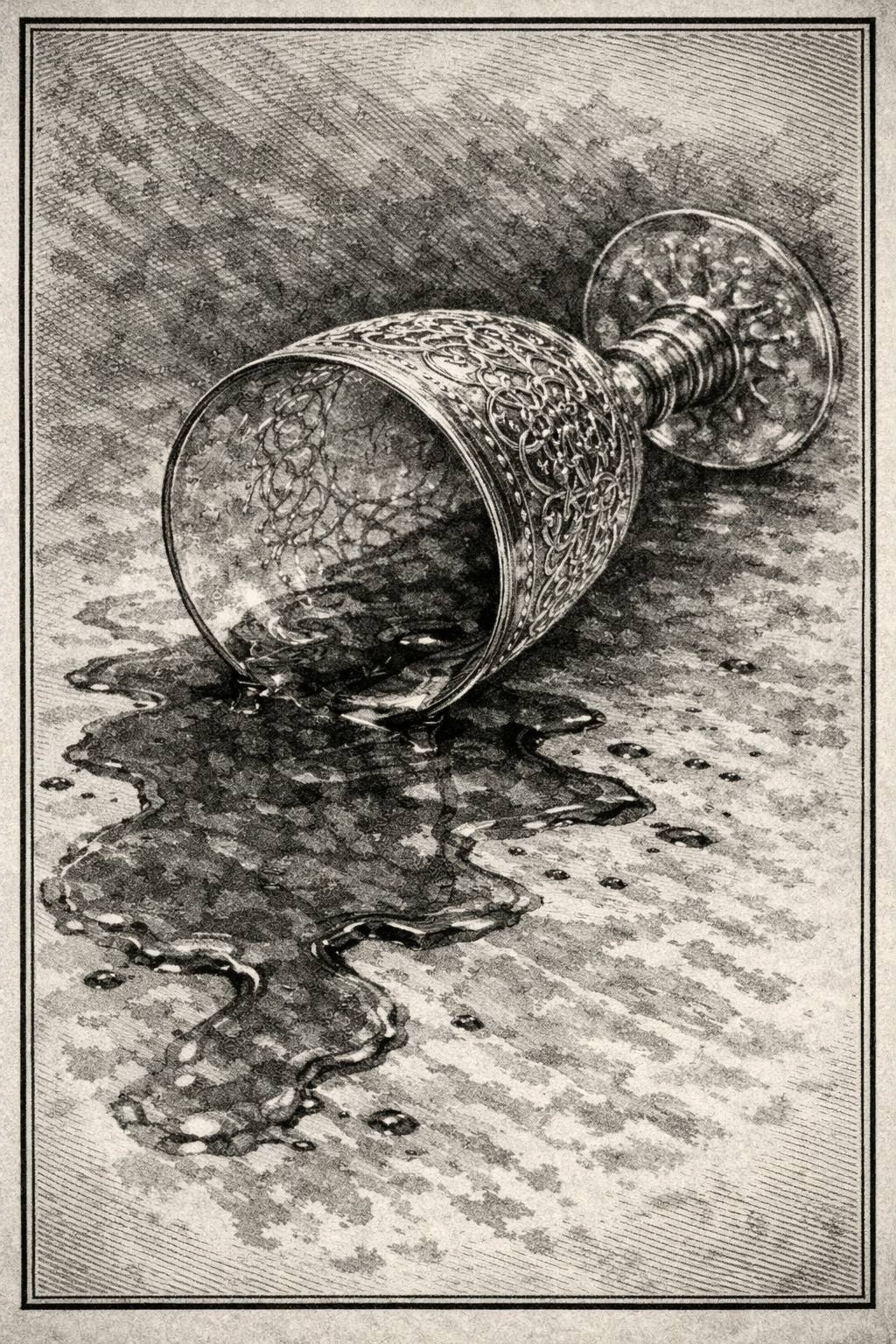
Before the palace doors open and the book of Esther begins, we’re already breathing the air of a world we know too well—a world where wealth, status, and spectacle masquerade as strength. Esther begins not in prayer but in a party. Not worship, but wastedness. It’s basically the ancient Near Eastern version of a frat party hosted by a billionaire king with too much power and too little character. King Xerxes doesn’t just govern an empire—he performs one. The opening banquet is one long victory lap: silk, marble, gold goblets, endless wine, and the kind of curated luxury that says, "Look how important I am."
Look at my new golden ballroom! Isn’t it (aren’t I) great? $300 million is a small price to pay to show it (me) off, don’t you think? (Ahem)
This is what happens when status becomes sacred: authority becomes a stage, people become props, and dignity becomes disposable. Xerxes embodies the ancient—and modern—temptation to build a world where others exist to decorate our greatness. And this spirit is alive today in the leaders who treat human beings like chess pieces, political leverage, or disposable inconveniences.
It’s there in the way undocumented families are rounded up and deported as if their God-given worth is irrelevant—parents torn from children, workers from communities, image-bearers from the land they have poured their sweat and soul into. When dignity is sacrificed for optics, when people become objects, we’re simply replaying Xerxes’ banquet with modern lighting.
And it’s there, heartbreakingly, in the victims of Jeffrey Epstein—girls groomed, trafficked, silenced, and consumed by powerful men who treated their bodies as currency and their souls as irrelevant. When the rich and famous use the vulnerable as entertainment, the Book of Esther suddenly reads like today’s headlines.
Back to Persia, because it’s at the peak of Xerxes’ months-long rager that the moment comes which exposes the whole charade. He summons Queen Vashti to be paraded before a room of drunken men—his human trophy.
But Vashti, the queen with a backbone, says no.
Her refusal is a declaration: "I am not furniture. I am not for display. I bear the image of God, and my dignity is more important than your fame, power, and wealth."
Xerxes, humiliated, reacts the way all fragile kings do: he signs an edict. He banishes her permanently from his presence, because insecure men would rather lose a queen than lose face.
The Rise of Another Queen… and Her… Guardian?
With Vashti gone, the empire launches a kingdom-wide search for a replacement queen—someone beautiful, compliant, usable. Think Miss America pageant meets stripper club.
Enter Esther.
She’s swept into the palace not because of her brilliance, wisdom, or faith—but because she’s gorgeous. Her beauty is her invitation; her dignity is irrelevant. She arrives as an orphan, a Jewish girl, a vulnerable outsider in a system designed to consume her.
Mordecai, her uncle, instructs her to hide her nationality. Commentators usually assign noble motives here—strategy, prophetic insight, divine positioning. Maybe. But the text never tells us. And the silence is suspicious. What if Mordecai wasn’t purely heroic? What if he saw an opportunity for himself? What if Esther’s beauty and proximity to power benefited him more than it protected her? It wouldn’t be the first time a young woman’s body was leveraged for a man’s advancement.
Later, Mordecai overhears an assassination plot and reports it through now-queen Esther. It saves the king—but it also earns Mordecai position, honor, and eventually political ascent. The king he saves is no saint. Just a powerful man with a harem and a fragile ego.
Maybe Mordecai was just running for Congress.
And this is where the story’s tension sharpens:
Is Mordecai acting out of righteousness?
Self-preservation?
Social climbing?
Some mix of all three?
Fair questions, I think, even if they are asked from a modern mindset. The Bible is full of complicated humans. We all are. And Mordecai is simply another.
God’s Redemptive Mischief
Regardless of Mordecai’s motives, what matters most is God’s movement. Because God takes this orphaned girl—used by the palace, maneuvered – perhaps – by her guardian, silenced by empire—and makes her the vessel of deliverance. The hero. The hinge of history. An overlooked person becomes the instrument of God’s rescue.
Tell me that’s not the Gospel.
Tell me that’s not a hat-tip to Jesus.
God constantly crowns the ones the world commodifies. He dignifies the ones culture diminishes. He chooses the overlooked to overturn the powerful.
Paul echoes Esther’s story when he writes about Jesus and His cross:
But God chose what is foolish in the world to shame the wise; God chose what is weak in the world to shame the strong;
God chose what is low and despised in the world, even things that are not, to bring to nothing things that are,
so that no human being might boast in the presence of God.
1 Corinthians 1:27–29
By the End of Esther…Who’s Boasting Now?
By the end of the book of Esther, Xerxes isn’t boasting anymore. No one is praising the king. No one is celebrating the empire. No one is applauding the palace.
Instead, The Feast of Purim is born—a two-day feast the Jewish people still celebrate today. It marks the moment when God overturned Haman’s (an Xerxes ICE agent) genocidal plot, rescued His people, and elevated a young, overlooked woman to a place of courage and influence.
Purim is loud, joyful, defiant.
It’s costumes and dancing and food and laughter.
It’s the oppressed singing at the top of their lungs because God flipped the script.
And no one praises Xerxes. No one praises Mordecai. Not even Esther receives ultimate acclaim. The spotlight lands squarely on God—the quiet, unseen Deliverer who never appears by name in the book yet orchestrates redemption in every hidden turn.
Purim is Israel’s way of shouting:
"No human king saved us.
God did."
And that is the deeper point:
Human power is loud, insecure, and temporary.
Divine power is quiet, steady, and unstoppable.
The Imago Dei Hidden in Plain Sight
Here is the heartbeat of the whole narrative: The Imago Dei (Genesis 1:27) cannot be canceled by kings, edited by empires, or rewritten by men with mixed motives.
Xerxes saw Esther as ornament.
Mordecai may have seen her as opportunity.
The palace treated her as replaceable.
But God treated her as irreplaceable.
He redeems not just her role—but her entire person.
He restores dignity that had been violated.
He lifts the head of the one no one else honored.
He sees what no one else sees: a daughter, not a commodity.
And then He uses her for His redemptive purposes.
And if that is true of Esther, it is also true of every immigrant mother praying not to be separated from her children… every undocumented worker whose sweat builds our cities while their personhood is disregarded… every soul crushed under systems that use rather than cherish… every victim of Epstein whose humanity was trampled by the rich and the wicked.
God is on their side.
God is in their story.
And God will one day defend the dignity others have denied.
For the Ones Who Have Been Used, Silenced, or Overlooked
Step out of Persia for a moment, and into your own history.
Maybe you’ve been maneuvered. Maybe you’ve been told you exist for someone else’s comfort or gain. Maybe you’ve been treated like decoration, background scenery, or emotional labor. Maybe you’ve been used in someone else’s story and never honored in your own.
Hear this with the full force of heaven:
Your dignity is not negotiable.
Your worth is not determined by someone else’s desire or neglect.
Your story is not disposable.
Your soul is not for sale.
The God who lifted Esther will lift you.
The God who dignified her will dignify you.
The God who restored her agency will restore yours.
Your story matters.
Your healing matters.
Your voice matters.
You matter.
If You Need a Guide on the Road to Healing
If Esther’s story touches a tender place in yours—if your past includes being used, ignored, minimized, silenced, or stripped of dignity—I want you to know this:
You don’t have to untangle that alone.
This is why I built The Way Soul Care—to help people reclaim the parts of their story that were stolen, silenced, or shamed.
To help you make sense of your story, recover your God-given dignity, find your voice again, walk toward wholeness, live from the Imago Dei instead of the scripts others wrote for you
If something in you whispers, "This is my story…" reach out.
Your healing matters too much to delay.
And I would be honored to walk the road with you.