The Blind Spots of Our Compassion
There’s a difference between knowing suffering exists and feeling its weight.
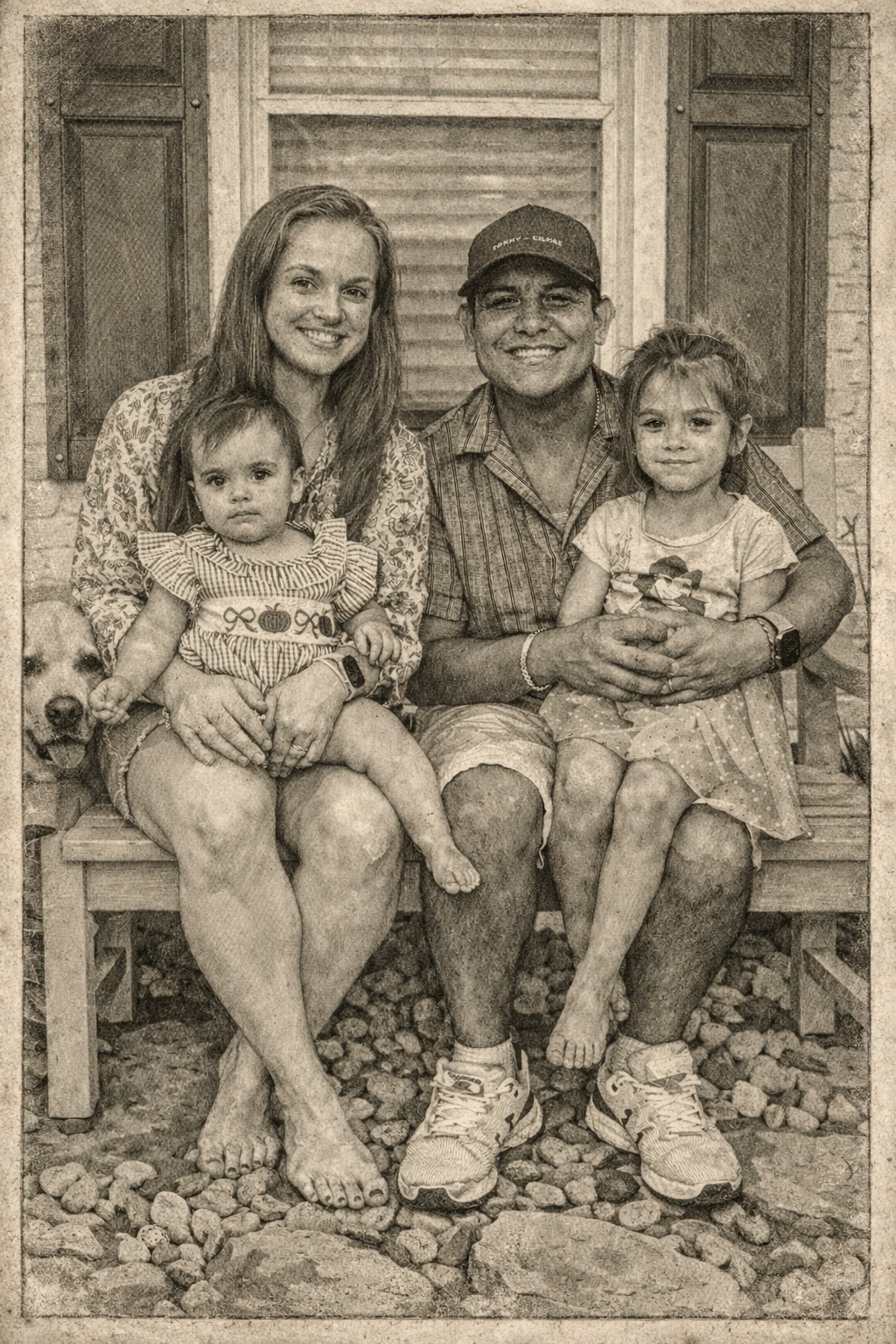
Last week, I learned that difference again the hard way. My nephew-in-law, Alejandro — a gentle, faithful, hardworking man — was taken by ICE. No crime. No violence. No threat to public safety. Just an honest man providing for his family. A husband. A dad of two little girls under four.
Now he sits in a jail alongside violent offenders, scared for his life… while his babies cry for their father and their mother wonders how to hold a home and her heart together.
Suddenly, immigration policy isn’t a headline. It’s a hollow chair at Thanksgiving. It’s a three-year-old whispering, “Mommy, where did Daddy go?” And I am ashamed to admit this: I have cared about immigration issues for years…But I care differently now .
Why is that? Why am I like this? Why are we like this? Why does compassion stay theoretical until pain knocks on our door? Are our hearts really this small? Or just this human?
Somewhere along the way many of us traded in Jesus’ command — “love your neighbor” — for a softer, more comfortable creed:
“Love your neighbor… if you know them, agree with them, and they live on your street.”
We assume suffering is distant until it isn’t. We vote from safety, but families shatter in the fallout. That’s not politics. That’s proximity blindness.
We don’t know how to weep with those who weep because our tears only activate when our life gets touched. Until then, we compartmentalize suffering like it’s an item on a shelf. That’s the subtle cruelty of distance.
Not hatred — absence.
Not malice — blindness.
A failure to imagine someone else’s pain until it becomes our own.
Jesus’ Incarnation
God refusing to love from a distance. Thank God He is not like us. Our Savior didn’t love humanity from heaven with a polite wave and a Hallmark sympathy card. He stepped in . He moved toward suffering. He took on flesh — The Word became flesh and dwelt among us. (John 1:14a). He entered our world, our fear, our fragility. He incarnated. Christmas is all about incarnation. At least it should be.
Jesus the Refugee
And remember this — Jesus’ early life didn’t begin in comfort. As an infant, He and His family fled for their lives under a violent government order (Matthew 2:13–15). They crossed borders not for luxury, but for survival. Our Messiah began as a refugee child . He felt our pain. He carried our burdens. He breathed our dust and bled our blood. And He still does. For Alejandro and his family. And for you and me.
That is not abstract theology.
That is Christian compassion.
Incarnation is not a doctrine to admire — it is a lifestyle to walk in.
If the Church is the Body of Christ…
…then we don’t get to stay distant from the hurting.
We don’t get to shrug at families being torn apart, or explain away injustice because it's lawful, or hide behind slogans while children lose their fathers. We don’t get to love in theory.
We incarnate.
We step in.
We come close.
To the immigrant. To the widow. To the refugee. To the family crushed under policies they never wanted nor imagined would touch them.
You want to know what separates Christians from everyone else?
Not our opinions — our proximity.
We go where the pain is. We don’t wait until the pain comes to us.
I am learning — again — what love demands
I wish I didn’t have to learn compassion through my family’s suffering. But here we are. And here’s the strange grace in it: What shattered our hearts has also sharpened our vision.
My niece wrote these words as she held her daughters and prayed their daddy survives the night in jail:
“Alejandro is not a statistic.
He is a loving, hardworking father.
Please hurt with us.”
“Please hurt with us.”
That sentence alone is a theology of incarnation.
It’s also a rebuke to every form of cheap faith that prays without presence, votes without empathy, and worships a God who came close while refusing to do the same.
So what now?
Some will read this and shrug.
Some will get defensive.
Some will say, “But the law…”
Friend, grace is the only legal status you ever had with God.
If the Church cannot lead with compassion, who will? If we cannot feel until it hits
home,
maybe it's time to redraw where home is.
A humble invitation
You don’t need to change your politics to change your posture. Just let someone else's pain come close enough to matter. Let compassion invade your distance before tragedy forces its way in.
That is Christ-likeness.
That is love.
That is the Gospel in motion.
That is The Way.
And may God help us — not just to pray for the hurting, but to show up for them before they’re our kin.
Because in Christ, they already are.