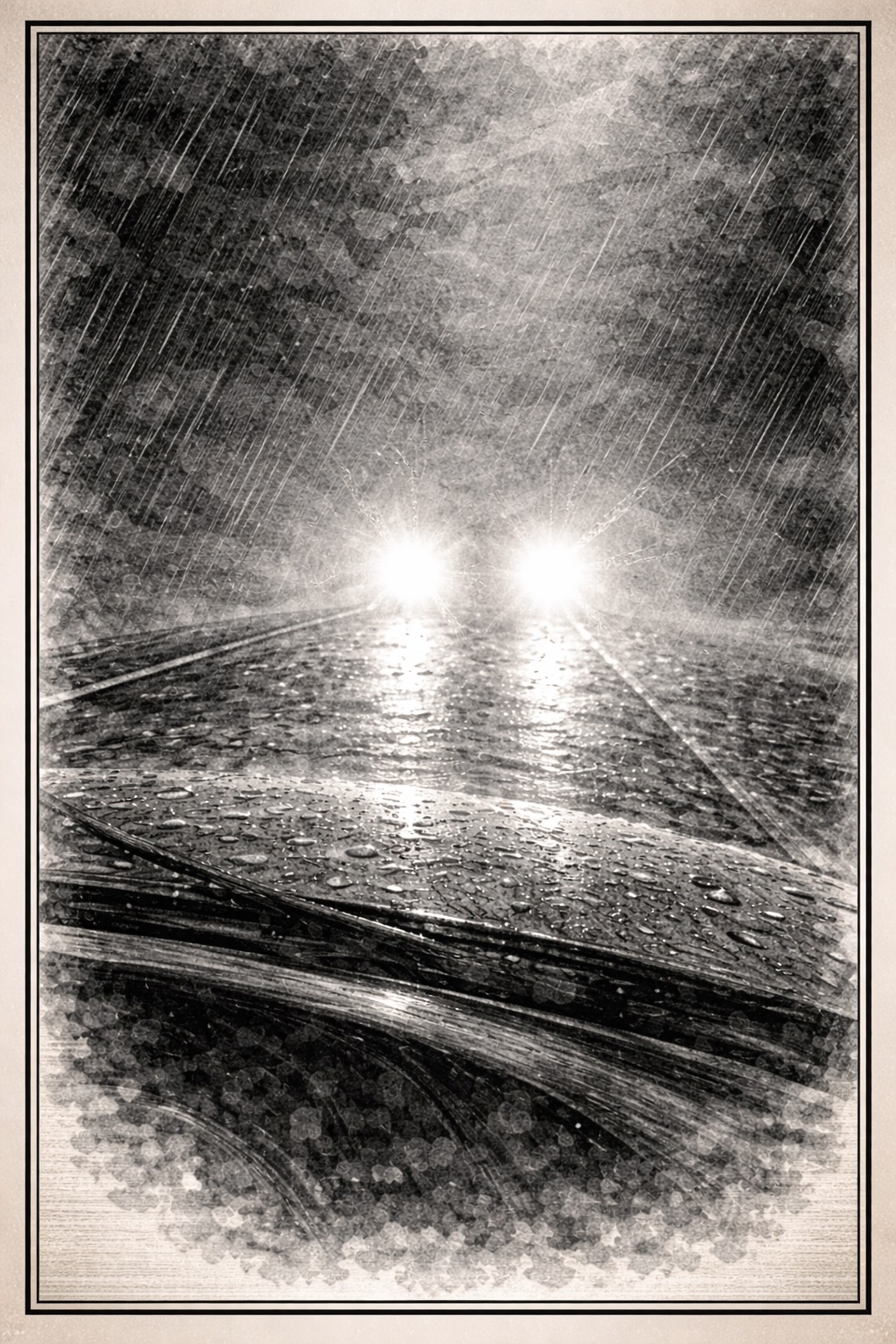
I still remember driving through heavy fog one morning, the kind so thick that your headlights do little more than bounce back at you. My instinct was to press on, to keep my normal pace, to make good time. But every mile at that speed was reckless. The fog demanded that I slow down, but everything in me resisted. Efficiency felt more important than caution.
That’s what fog does — it confuses, it blinds, it tempts us to hurry when wisdom says slow down. And when cars push forward at full speed into fog, they don’t just risk themselves; they crash into each other. The confusion turns into collisions, and everyone ends up hurt.
The assassination of Charlie Kirk dropped like that kind of fog across our nation — sudden, heavy, and disorienting. And instead of slowing down to face the offense of death honestly, we’ve rushed to make sense of it quickly. We’ve tried to carve out clarity by scapegoating — colliding with each other in blame, judgment, and hostility.
Some call Kirk a faithful Christian witness. Others label him a divisive agitator. And into that swirl of opinions, the devil whispers: Put the pedal to the metal. Pick a side. Attack. Condemn. Divide.
Of course, there was an actual assassin who pulled the trigger and violently ended a life. He must answer for that. But he is not a big enough target to absorb all our pent-up rage against something as vast and offensive as death. And neither are Republicans or Democrats, conservatives or progressives.
The real enemy is death. And behind it, the devil — “a murderer from the beginning” (John 8:44) — who delights in turning fog into collisions, confusion into hostility.
The Pastor’s Burden in the Fog
This is where pastors and ministry leaders find themselves. You are expected to bring clarity in the fog, peace in the collisions, and hope in the face of death. That is no small task. Congregants need to understand: your pastor is navigating this storm with you, but also for you. They are trying to name death honestly, point to Christ’s victory, and keep the church from tearing itself apart in blame. And they feel the weight of it.
Naming the Real Enemy
Scripture does not minimize what we are facing. Paul writes,
1 Corinthians 15:26
The last enemy to be destroyed is death.
Death is not a friend. It is not natural. It is the intruder that has haunted humanity since the fall. That’s why it feels so offensive. That’s why grief spills into anger, and why our instinct is to deflect. But we must not shrink the problem down to human scale by treating one man, one party, or one ideology as the ultimate culprit. The real enemy is death itself — and the devil who wields it to divide us.
Confusion Is the Devil’s Playground
Paul reminds us:
1 Corinthians 14:33
God is not a God of confusion but of peace.
When confusion reigns, it is not coming from God. Jesus warned,
Matthew 12:25
Every kingdom divided against itself is laid waste.
That is what the devil is after — a divided house, a divided people, a divided church. He thrives when we spend our energy fighting each other instead of resisting him.
A Call to Unity, Not Hostility
In a polarized culture, we are constantly tempted to divide along political lines. But the gospel calls us to something higher. Jesus prayed for His disciples:
John 17:21
That they may all be one… so that the world may believe that you have sent me.
Paul declares:
Ephesians 2:14
He himself is our peace, who has made us both one and has broken down in his flesh the dividing wall of hostility.
And Jesus blesses those who live this out:
Matthew 5:9
Blessed are the peacemakers, for they shall be called sons of God.
In short, we are called to love. And as Paul Miller said in his book, Love Walked Among Us, “Love is not efficient.” Hostility, hatred and judgment are.
The fog tempts us to race ahead in hostility. The gospel calls us to the slow and messy process of love and unity and then, together, to proclaim the Gospel of reconciliation, redemption and resurrection to the world.
Practical Gospel Responses for Pastors and Congregations
So what does it mean to lead redemptively right now?
- Name death as the enemy. Don’t soften it. Help people see why it feels so offensive — because it is (1 Corinthians 15:26; John 11:35).
- Resist scapegoating. Yes, justice matters. But judgment belongs to God (Romans 14:10–12; James 4:12).
- Teach lament. Create space for grief, prayer, and tears (1 Thessalonians 4:13). Don’t rush to explanations.
- Proclaim Christ’s victory. Death is swallowed up in resurrection hope (1 Corinthians 15:54–57).
- Model peace. Live gently, patiently, and peaceably in a polarized age (Romans 12:18; 2 Timothy 2:24–25).
The Victory Already Won
Here is the good news: we are not left in the fog forever. Christ has already pierced it.
1 Corinthians 15:54–57
Death is swallowed up in victory. O death, where is your victory? O death, where is your sting? Thanks be to God, who gives us the victory through our Lord Jesus Christ.
Death is the last enemy, but it has already been defeated. The devil sows confusion, but his lies cannot stand against the light of Christ.
The assassination of Charlie Kirk is both a national tragedy and a spiritual test. Will we let the fog of confusion drive us into collisions of hostility? Or will we, as the church, slow down, breathe, and walk in the clarity of the gospel?
Paul writes:
2 Corinthians 5:18, 20
God… gave us the ministry of reconciliation… We are ambassadors for Christ, God making his appeal through us.
That is our calling — pastors and congregants alike. Not to scapegoat. Not to divide.
But to lead each other through the fog into the light of Christ. To remind a weary world that the last enemy is death, but the final word is resurrection.
And in that resurrection, the victory is already won.